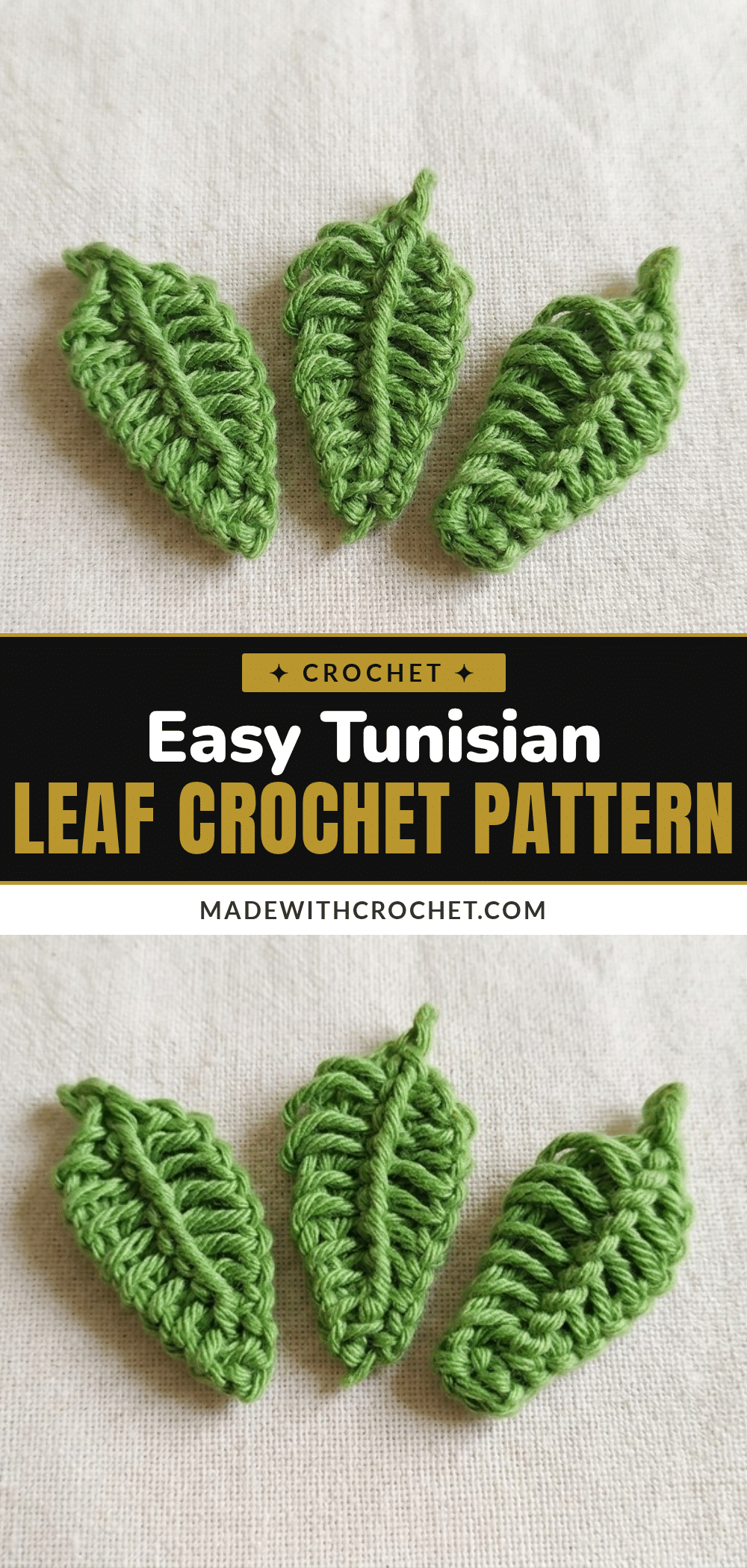
Embrace the changing seasons with this easy Tunisian leaf crochet pattern, a perfect project for adding a touch of nature to your handmade creations. Whether you are looking to craft a lush garland for a spring celebration, create festive accents for autumn decor, or simply enjoy the meditative rhythm of Tunisian crochet, this leaf motif offers a satisfying blend of technique and beauty. It is an excellent way to use up small yarn scraps while mastering the unique forward and return passes of Tunisian crochet.
Seasonal Styling Ideas
One of the most charming aspects of this Tunisian leaf pattern is its versatility across different times of the year. In spring and summer, use vibrant greens or variegated yarns to create garlands for Easter baskets or summer table runners. As the weather cools, switch to deeper forest greens, burgundies, or golds to craft appliqués for holiday gifts or cozy autumn scarves. The leaf’s medium thickness and organic curve make it an ideal embellishment for wearable items like beanies and shawls, adding a subtle, textured detail that feels both modern and timeless. You can also cluster several leaves together to form a beautiful, dimensional brooch or a unique hair clip, proving that this small motif has big decorative potential.
Project Overview
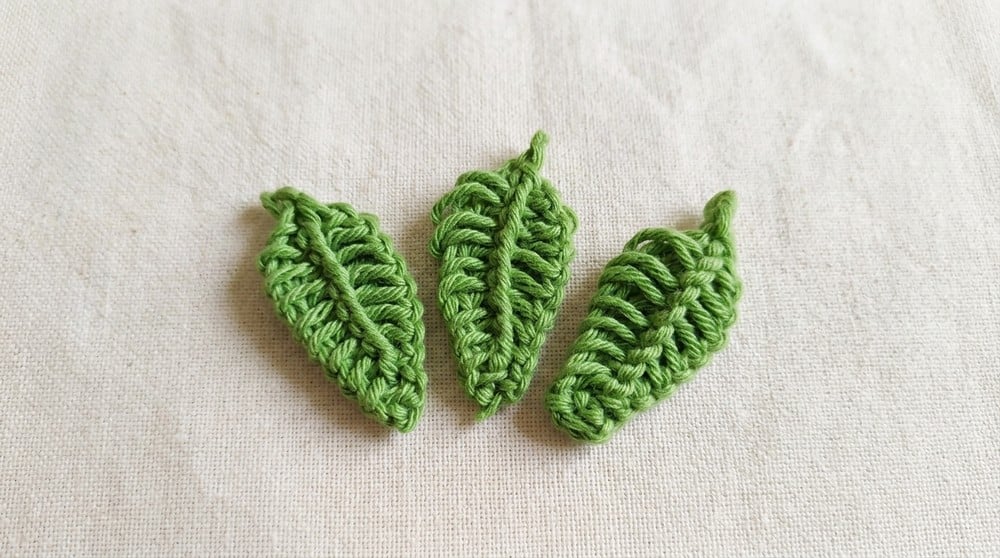
This Tunisian crochet leaf is a swift, satisfying motif that yields a beautifully contoured result with just a few minutes of careful work. The design balances simplicity with elegance, creating a delicate silhouette that naturally folds and curves. It serves as a gentle introduction to Tunisian stitches, allowing makers to explore loop height control and shaping without feeling overwhelmed. The finished piece has a medium thickness, lending a cozy texture without being bulky, making it perfect for layering or detailed embellishments on various textile projects.
Materials
- Yarn: Charme yarn or comparable smooth DK-weight cotton, in green or any preferred leaf color.
- Crochet Hook: Nickel-plated size 4 (4 mm).
- Tools: Scissors and a yarn needle (for weaving in ends).
Gauge and Finished Size
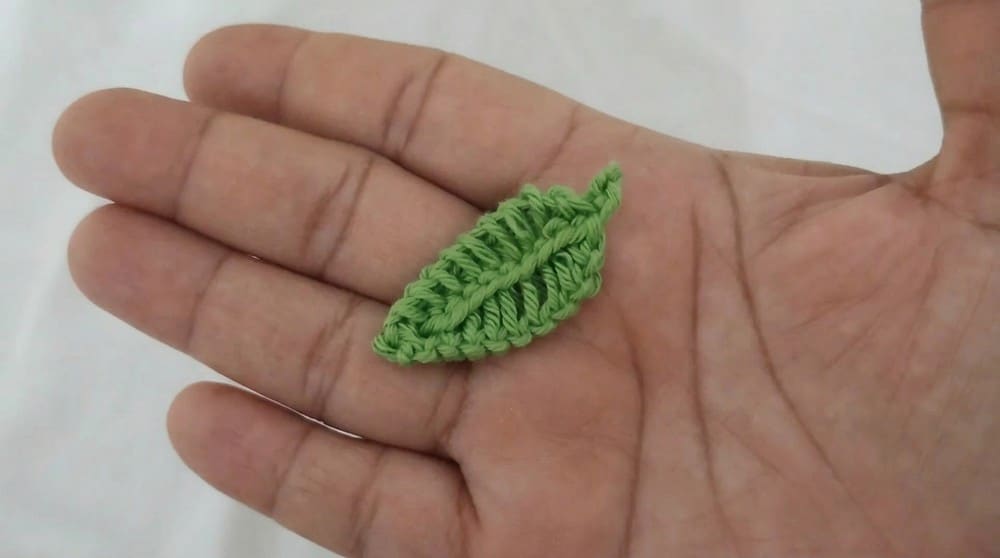
Gauge is not critical for this pattern. However, ensure loops are neither too stiff nor too floppy, as tension and uniform loop length contribute to an aesthetically pleasing shape. A tight gauge is recommended for well-defined leaf edges.
The finished leaf measures approximately 5–7 cm (2–2.75 inches) in length, with moderate width at the broadest point. Sizing may vary based on yarn thickness and tension. No further assembly is needed as each leaf is a single, integrated piece. You may block the leaf slightly to enhance shape and flatten if desired.
Abbreviations
- ch: chain stitch
- yo: yarn over
- sl st: slip stitch
- lp(s): loop(s)
- sp: space
Pattern Notes
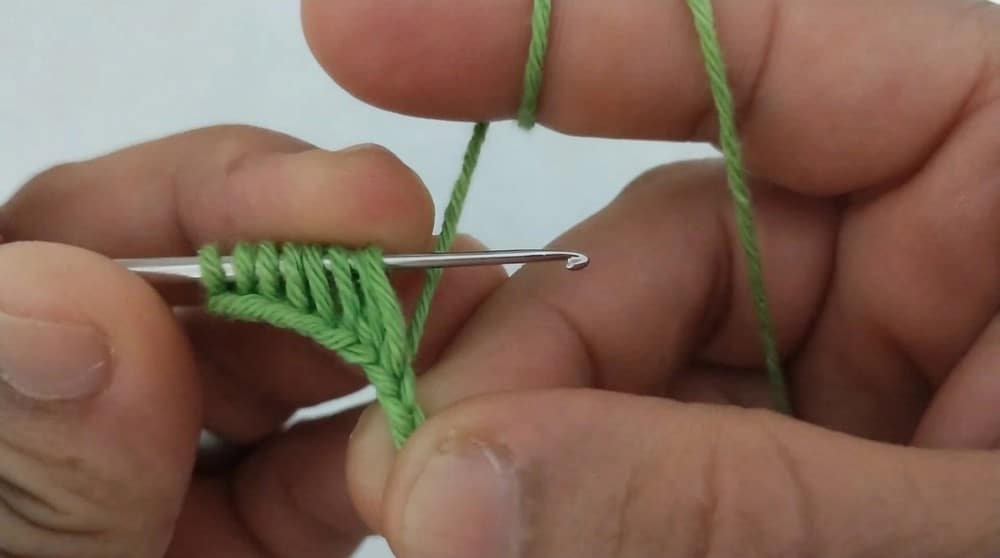
Consistent loop heights in each pass are essential for symmetrical shaping. This pattern uses Tunisian crochet worked on a standard crochet hook. Adjusting the number or height of loops produces leaves of different sizes or shapes if desired. Make sure to pull up each loop to an appropriate height for gradual shaping, as described below. This project provides practice in loop height control, a skill that enhances many other Tunisian projects.
Special Stitches
- Tunisian Forward Pass (TFP): Insert hook, yarn over, pull up a loop, keep on hook.
- Tunisian Return Pass (TRP): Yarn over, pull through 2 loops; repeat until only one remains.
- Varying Loop Height: Gradually increase the height of loops with each pick-up for shaping, then decrease as noted.
Pattern Instructions
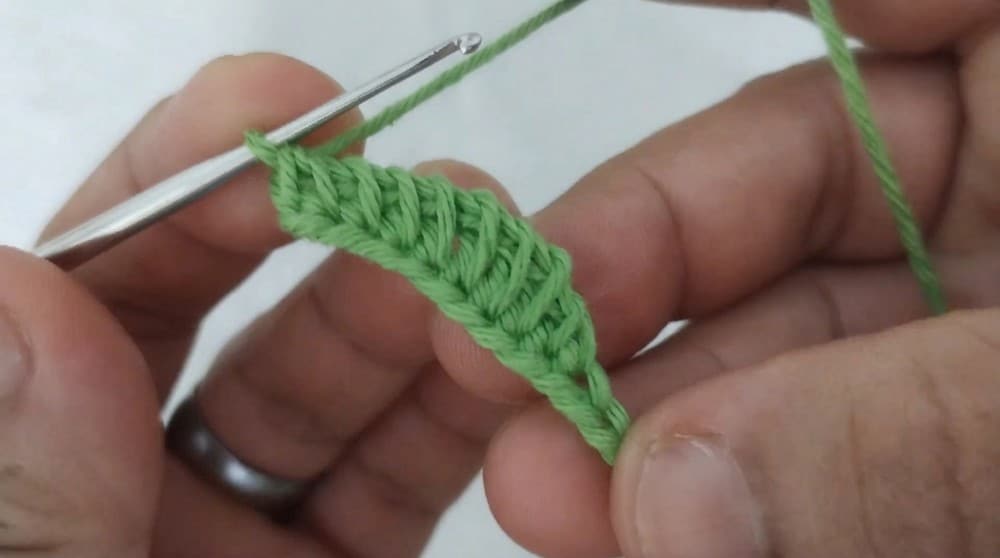
Foundation Chain
Ch 12 in your chosen yarn.
First Side of the Leaf
Loop Pick-up (Forward Pass)
Starting in the 2nd ch from hook:
- First loop: Insert hook, yo, pull up a loop (keep low).
- Second loop: Into next ch, insert hook, yo, pull up a loop (slightly higher).
- Continue in each chain; pick up a taller loop each time, so:
- 3rd ch – even higher
- 4th ch – higher still
- 5th and 6th ch – continue to increase height
- Seventh loop (7th ch): Tallest for leaf’s tip.
- Eighth loop: Decrease height slightly; do not pull this loop as high as the previous.
- Ninth loop (final ch): Insert hook, yo, pull up a short, low loop.
You should have 9 loops on your hook.
Closing the Side (Return Pass)
Begin return pass: Yo, pull through 2 loops. Repeat: (yo, pull through 2) all the way down until one loop remains.
Second Side of the Leaf
Setup
Ch 1. Turn the work to position for the second side.
Loop Pick-up (Forward Pass)
- First loop: Insert hook into the first available sp (on opposite side), yo, pull up a low, short loop.
- Loop 2–7: Continue inserting hook into each remaining sp, and increase loop height with each pick-up to match the arch of the first side, so that:
- Loop 2: slightly taller
- Loop 3–6: taller each time
- Loop 7: the highest point
- Loop 8: Insert into the next sp and make this loop shorter.
- Loop 9: Last sp, insert and keep the loop low.
There should be 9 loops once more.
Closing the Side (Return Pass)
As before, yo, pull through 2 loops at a time across the row, ending with a single loop left on your hook.
Finishing
Ch 1 to secure. Insert hook into the very tip/stem of the leaf (where the tallest loop was worked), yo, pull through with a sl st to bring both sides together neatly at the top. Ch 1 to lock in place, cut yarn, and pull through.
Assembly
No further assembly is needed as each leaf is a single, integrated piece. Use a yarn needle to weave in ends on the back or closest edge for a seamless look. The final slip stitch at the tip gives additional definition, ensuring a crisp point and a stable body that resists distortion.
Tips
- Feel free to follow the free pattern and see how quickly you can bring a bit of nature into your yarn stash.
- The pattern also leaves room for fun customizations — try different yarns or colors to evoke seasonal leaves, or mix various sizes to create a lively collection.
- For best results, maintain a consistent tension. If your loops feel too floppy, try using a slightly smaller hook or pulling your loops up more tightly.
FAQs
What is the best yarn for this Tunisian leaf pattern?
The pattern recommends Charme yarn or a comparable smooth DK-weight cotton. Cotton provides structure and definition, which helps the leaf hold its shape, but you can also use acrylic or wool blends for a softer drape.
Is this pattern difficult for beginners?
This project is rated Beginner to Confident Beginner. A basic understanding of chain stitches and Tunisian crochet forward and return passes will be helpful. It is a gentle introduction to Tunisian stitches and loop height control.
How do I adjust the size of the leaf?
You can adjust the size by changing the number of chains in the foundation or by varying the height of the loops you pull up. Increasing the number of loops or pulling them taller will result in a larger leaf.
Can I use this leaf for amigurumi?
While this leaf is designed as a standalone motif or embellishment, you can certainly sew it onto amigurumi projects. For a stiffer leaf suitable for toys, consider using a tighter gauge or blocking the finished piece firmly.
How do I fix uneven edges?
Uneven edges are usually caused by inconsistent loop heights. Ensure you are pulling up each loop to the specific height described in the instructions (low, slightly higher, tallest, etc.) to maintain the symmetrical curve of the leaf.
This Tunisian crochet leaf is a versatile addition to any maker’s toolkit. Whether you are adding it to a holiday tree or a spring wreath, the technique is rewarding and the result is elegant. For more festive inspiration, you might also enjoy these easy crochet Christmas ornaments or check out this crochet snowflake pattern for winter decor.
Pin This Crochet Pattern!