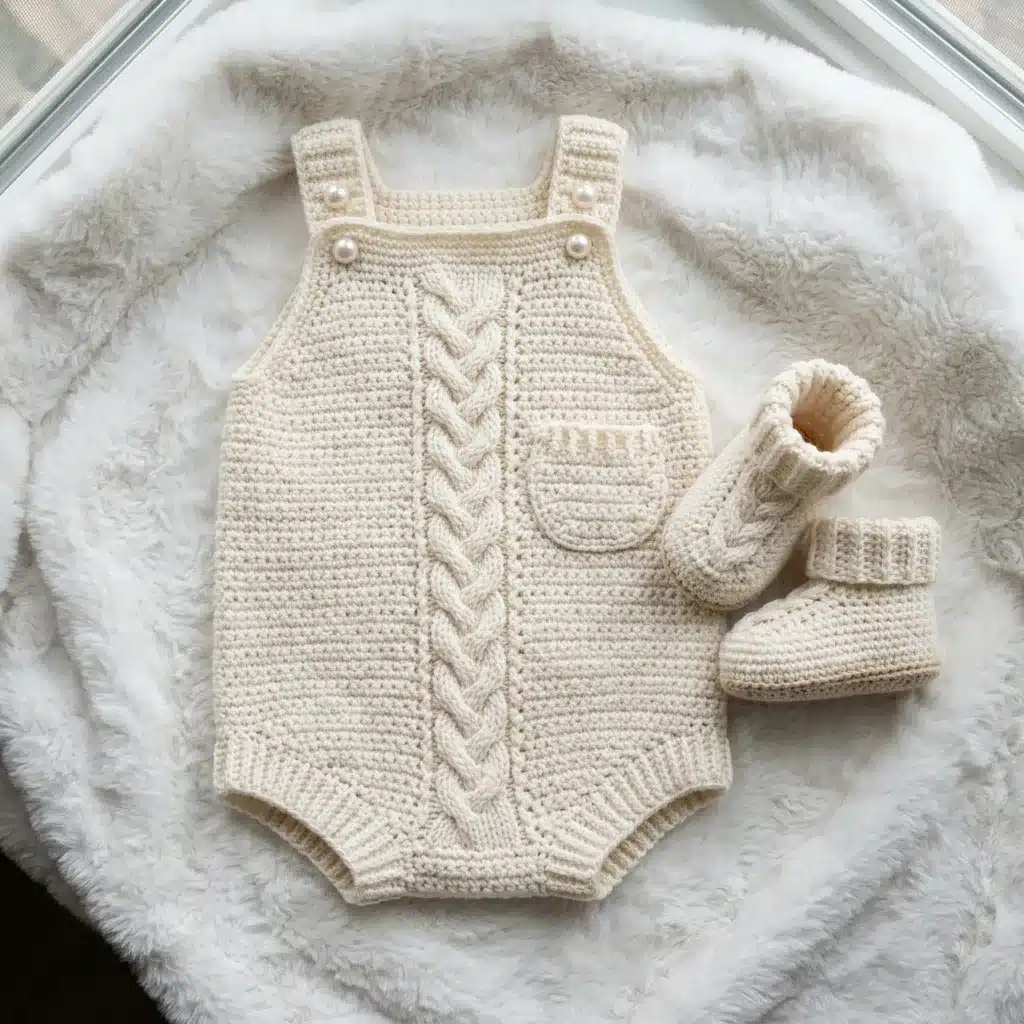
Crocheting something you can wear is a special kind of milestone. This page brings together all our free crochet clothing patterns for adults and little ones: summer halter and crop tops, lace and tiered dresses, cardigans, capes and shawls, and a large collection of baby rompers, dresses and cardigans.
The patterns are sorted into four collections by garment type. Each collection page lists the designer's skill level, hook and yarn for every pattern, sorted from the most approachable to the most advanced. Below the collections, you'll find a complete guide to making crochet garments that fit: gauge, measuring, yarn, construction, finishing and care.
Browse crochet clothing by garment
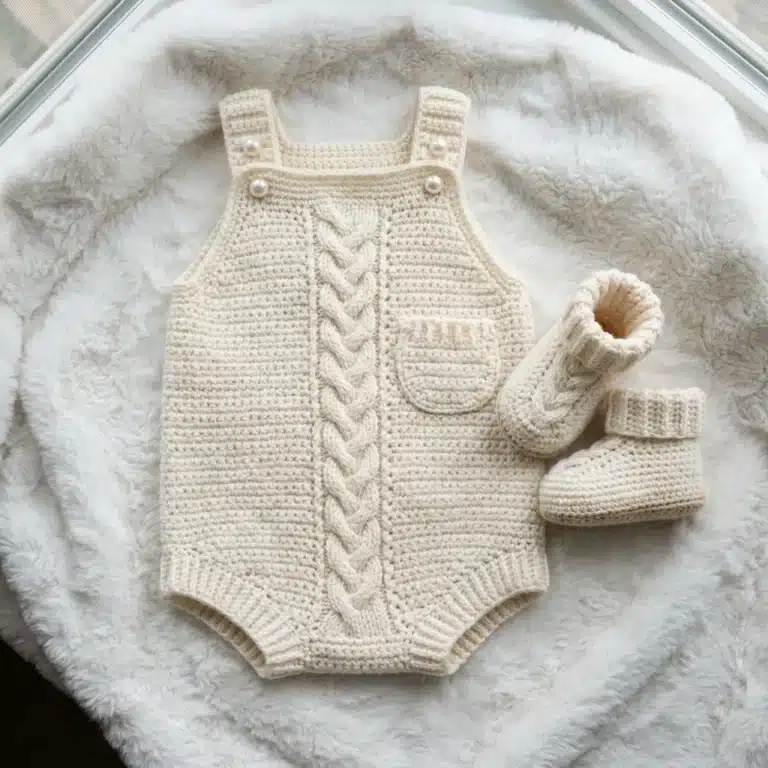
- Baby and toddler clothes: our biggest garment collection, with rompers, playsuits, dresses, pinafores, cardigans, ponchos, cocoons and socks.
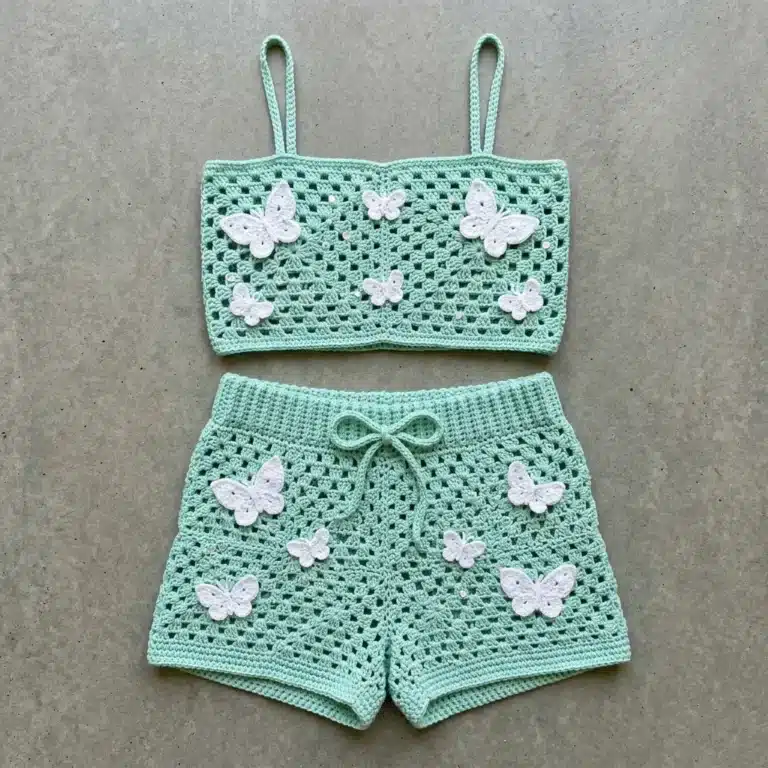
- Tops: halter tops, crop tops, boho and fairy tops, a bikini and festival sets with shorts.
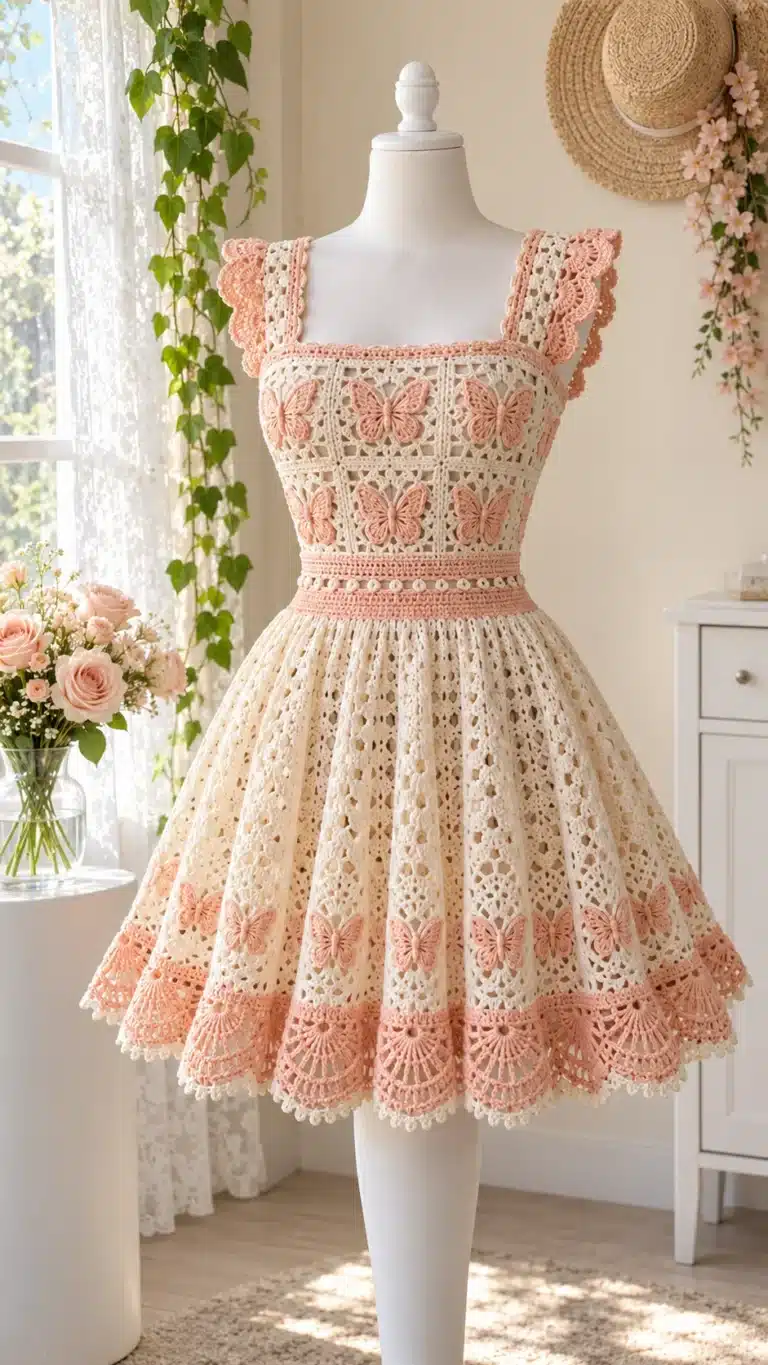
- Dresses and skirts: lace dresses, a babydoll, a tiered dress, a fairy dress, a bell-sleeve dress and a snowflake skirt.
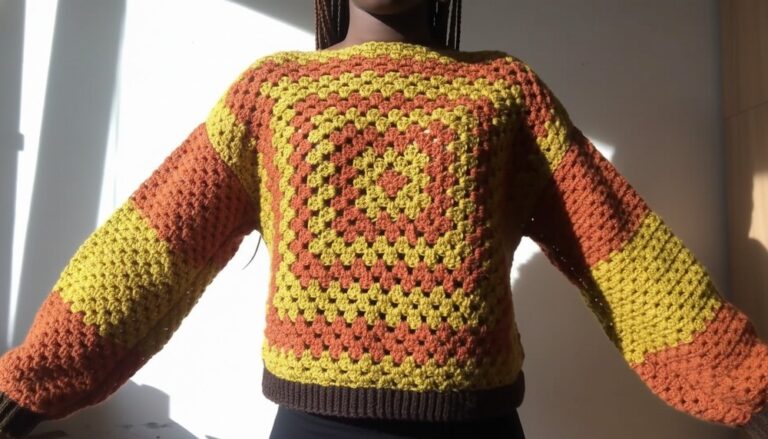
- Cardigans, shawls and capes: a granny square sweater, butterfly cardigans and shawls, hooded capes, a poncho and a wrap.
To finish an outfit, browse our crochet hats, headbands and bows. For seasonal wear, the pumpkin baby romper and the pumpkin hooded cape also appear in our Halloween collection.
Your first crochet garment
A garment is a bigger project than a toy or a coaster, but it does not have to be harder. Start with a piece that needs little fitting:
- A shawl, wrap or poncho: no sizing at all. The cream blush ombre poncho on a 6.5 mm hook grows quickly in bulky yarn.
- A halter top: ties do most of the fitting. The butterfly halter top is rated beginner to intermediate.
- A granny square sweater: built from squares you can check for size as you go. The granny square sweater is rated beginner by its designer.
- A baby garment: small, quick, and forgiving. The rainbow granny square baby cardigan is a lovely first one.
Save fitted lace dresses and advanced tops for when you have made a few garments and are comfortable with gauge.
Gauge: the one step you should never skip
Gauge is the number of stitches and rows in a set measurement, usually 10 cm. In a toy, a gauge difference just makes a slightly bigger or smaller toy. In a garment, it changes the fit.
Here is why: if a pattern's gauge is 18 stitches per 10 cm and yours is 16, a top designed to measure 90 cm around will come out at about 101 cm. That is a whole size larger.
How to swatch:
- Crochet a square at least 15 cm wide, in the stitch pattern the garment uses.
- Wash and dry it the way you will wash the finished garment. Cotton and acrylic can change after washing.
- Measure the stitches and rows in the middle 10 cm, away from the edges.
- Too many stitches? Use a bigger hook. Too few? Use a smaller one. Swatch again until it matches.
Measuring for a good fit
Each garment pattern lists finished measurements. Compare them with your own body measurements, not just the size name.
| Measurement | How to measure | Used for |
|---|---|---|
| Bust | Around the fullest part of the chest | Tops, dresses, cardigans |
| Waist | Around the narrowest part | Dresses, skirts, fitted tops |
| Hips | Around the widest part | Skirts, dresses, shorts |
| Upper arm | Around the widest part of the arm | Sleeves |
| Length | From shoulder to desired hem | All garments |
Ease is the difference between your body measurement and the garment's finished measurement. Positive ease means the garment is bigger than your body, for a relaxed fit. Negative ease means it is smaller, for a stretchy, close fit. Many lace tops and dresses on our site are designed with negative ease at the bust, so read each pattern's fit notes.
For babies, sizes are usually given by age and chest measurement. Babies vary widely, so measure the baby if you can, or make the next size up for a gift.
Choosing yarn for garments
The yarn decides how a garment drapes, breathes and wears.
| Fiber | Drape and feel | Good for |
|---|---|---|
| Cotton | Crisp, cool, breathable, little stretch | Summer tops, dresses, baby clothes |
| Cotton blends | Softer, lighter, a little more drape | Everyday tops and cardigans |
| Acrylic | Soft, warm, durable, machine-washable | Cardigans, capes, baby layers |
| Chenille | Plush, cozy, quick to work | Cardigans and baby ponchos |
| Fine sport or fingering | Light and airy, delicate lace | Lace dresses, shawls, fairy tops |
Use the yarn weight the pattern lists. If you substitute a different fiber, swatch carefully: a cotton swatch and an acrylic swatch of the same weight can measure quite differently.
Buy all your yarn at once, from the same dye lot, with a little extra. A second dye lot can show as a visible stripe across a dress or cardigan.
How crochet garments are constructed
Garment patterns on our site use a few different construction methods:
Worked in panels
The front, back and sleeves are made separately, then sewn together. This is easy to follow and to adjust, because you can check each panel against the measurements.
Built from motifs
Granny squares, flowers or butterfly motifs are made individually and joined. The granny square sweater, several baby garments and some dresses use this method. It is portable and forgiving: an uneven motif can simply be remade.
Top-down or bottom-up in one piece
Some tops and dresses are worked in one piece from the top or the bottom. Top-down construction lets you try the garment on as you go and adjust the length at the end.
Reading a garment pattern
Garment patterns hold more information than toy patterns, and it pays to read the whole thing before you buy yarn.
- Size chart and finished measurements: usually near the top. Circle your size so every number you need later stands out.
- Numbers for each size: instructions often list several numbers at once, for example "ch 60 (66, 72, 78)". Each number belongs to one size, in the order the sizes are listed. Highlight yours throughout.
- Schematic: some patterns include a diagram of each piece with its measurements. It is the quickest way to see where a garment will be long, short, wide or fitted.
- Stitch pattern and repeats: lace and motif garments repeat a set number of stitches. Changing the size means adding or removing whole repeats, not single stitches.
- Assembly order: note when pieces are joined, and where edgings and ties are added.
Adjusting a pattern to fit you
You do not have to match a pattern's sizes exactly. A few simple adjustments cover most bodies:
Length is the easiest change. Add or remove rows in a straight section, before any shaping starts, and write down what you did so you can repeat it on matching pieces. For dresses and long cardigans, remember that crochet tends to lengthen with wear.
Between sizes: choose the size closest to your bust measurement for tops and cardigans, then adjust length. For skirts and dresses, choose by the hip measurement if the garment is fitted there.
Width: for stitch patterns with repeats, add or remove one full repeat, and check how much that changes the measurement using your gauge swatch.
Coverage: lace and mesh tops can be lined, worn over a layer, or worked in a denser stitch over the bust.
Planning garments by season
Crochet garments are seasonal by nature. Cotton tops, halter tops, the bikini and the summer dresses suit warm weather, so start them in late winter or early spring and they will be ready when the sun comes out. Capes, cardigans and the bell-sleeve dress are best started in late summer, so they are finished before the first cold days. Baby clothes follow the baby: a summer baby needs light cotton rompers, and a winter baby needs cardigans and ponchos.
Finishing: blocking, seams and edges
Blocking evens out stitches and sets the shape. Wet or mist the garment, pin it to the finished measurements and let it dry flat. Lace and shawls change most, opening up dramatically.
Seams: a whipstitch or mattress stitch gives a flat, flexible seam. Match the rows or motifs carefully, and pin before sewing.
Edges: a round of single crochet around necklines, fronts and hems neatens the edges and stops them from curling or stretching.
Buttons and ties: sew buttons on with strong thread and several passes. For baby garments, short ties or snaps are often safer.
If you need a refresher on the basic stitches, see our guides to the foundation chain and single crochet.
Common garment problems, and how to fix them
"It's too big." Usually a gauge problem. Swatch again with a smaller hook, or follow a smaller size.
"It keeps getting longer." Heavy crochet fabric stretches with gravity, especially in acrylic and long skirts. Store garments folded, not hung, and choose cotton for long pieces.
"The edges are wavy." Too many stitches along the edge. Work the edging with fewer stitches, or use a smaller hook for the edging.
"The neckline gapes." Add a round of single crochet, working a few decreases at the corners, to pull it in gently.
"The sides don't match." Count rows on each piece, and write down any changes you make so you can repeat them on the second side.
Safety notes for baby clothes
Baby garments need extra care. Use soft, washable, low-shedding yarn, and avoid mohair and fuzzy novelty yarns for newborns. Do not use long drawstrings or ribbons at the neck. Sew buttons on securely and check them after every wash. Crochet cocoons and baby sacks are photo props, not for sleep. Our baby clothes collection has more detail on each of these.
Caring for crochet clothes
Check your yarn label first. In general, wash cotton and acrylic garments on a gentle cycle in a laundry bag, or by hand in cool water. Do not wring them out. Roll them in a towel to remove water, reshape them and dry them flat. Store garments folded in a drawer rather than on a hanger.
Frequently asked questions
What is the easiest crochet garment for a beginner?
A poncho, shawl or wrap, because they need no fitting. Halter tops and the granny square sweater here are also good first garments.
Do I really need to make a gauge swatch?
Yes, for garments. A small gauge difference can change a top by a whole size. Toys and decor are forgiving; clothes are not.
What yarn is best for crochet clothes?
Cotton or cotton blends for summer tops, dresses and baby clothes, and acrylic or blends for warm cardigans and capes. Use the weight the pattern lists.
How do I know what size to make?
Measure your bust, waist and hips, then compare them to the finished measurements in the pattern, allowing for the ease the designer recommends.
Why does my crochet garment stretch?
Crochet fabric is heavy, and gravity pulls it longer over time, especially in acrylic. Choose cotton for long pieces, and store garments folded.
More collections to explore
- Crochet Hats & Hair Accessories (15 patterns)
- Granny Square Crochet Patterns (17 patterns)
- Crochet Bag Patterns (19 patterns)